
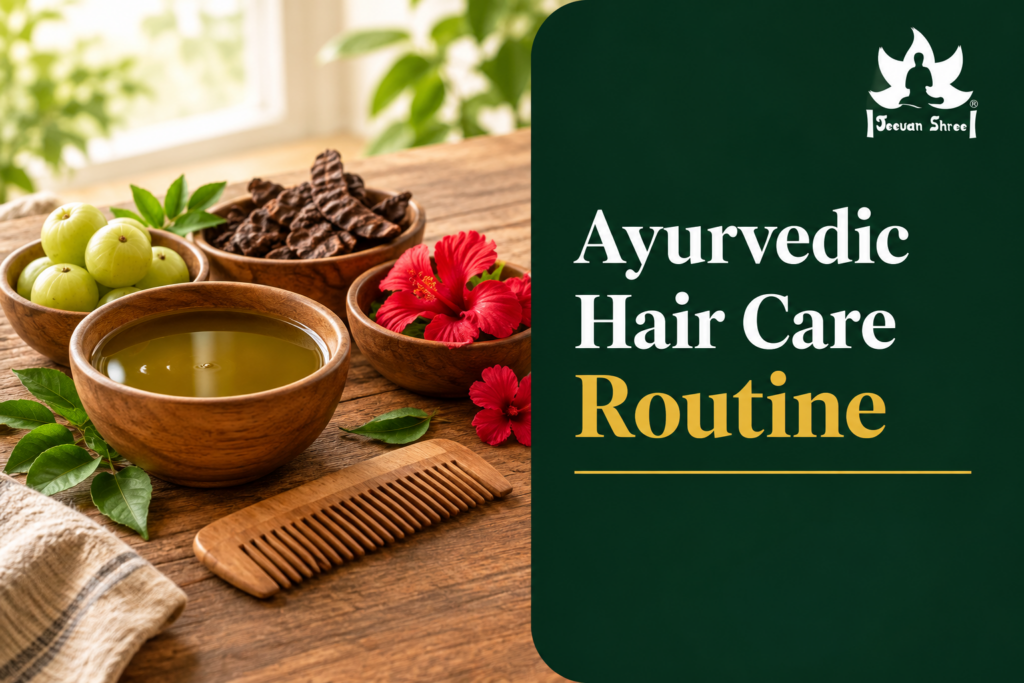
An Ayurvedic hair care routine is built on gentle habits: regular oiling, mild washing, everyday herbs and good food and sleep. Ayurveda looks at the hair and scalp as part of your overall wellness, so the routine goes beyond what you put on your hair. This guide explains a simple routine you can follow each week.
How does Ayurveda look at hair care?
In Ayurveda, hair is traditionally seen as connected to the body’s overall balance, including digestion, sleep and stress. Hair care therefore combines three things: caring for the scalp from outside, eating well, and keeping a steady daily rhythm.
This is the traditional view. It is not a medical claim, and results differ from person to person.
Your weekly Ayurvedic hair care routine, step by step

- Oil your scalp 1 to 2 times a week. Warm a little oil, such as coconut, sesame or a herbal hair oil, and massage it gently into the scalp with your fingertips for 5 to 10 minutes. This traditional practice is called shiro abhyanga or champi.
- Leave the oil on for 30 minutes to a few hours. Many people oil before bed and wash the next morning. If you have a cold, a blocked nose or a very oily scalp, you can skip leaving it overnight.
- Wash with a mild cleanser. Choose a gentle, herbal or sulphate-free shampoo, or traditional cleansers such as shikakai and reetha. Use lukewarm water, as very hot water can dry out the scalp.
- Rinse well and towel dry gently. Don’t rub hard. Pat the hair with a soft cotton towel.
- Comb carefully. Use a wide-toothed wooden comb and start from the ends, working up. Avoid combing very wet hair roughly.
- Limit heat and harsh styling. Let your hair air-dry when you can, and take breaks from straighteners and strong chemical treatments.
Everyday herbs used in Ayurvedic hair care
These herbs are traditionally used in Indian homes for hair and scalp care. Check each one for allergies before use.
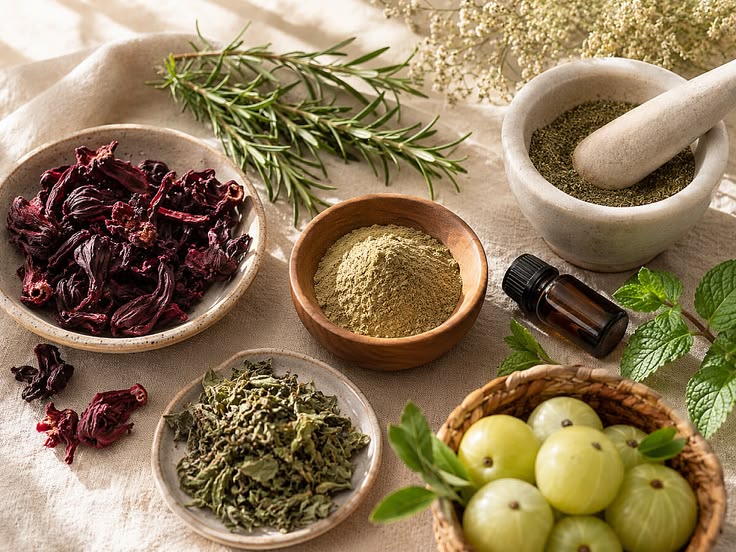
- Amla (Indian gooseberry): used in oils and hair packs, and eaten fresh or as a chutney.
- Bhringraj: a traditional herb often found in hair oils.
- Shikakai and reetha: natural, mild cleansers for washing hair.
- Hibiscus: used in hair masks and oils.
- Curry leaves and fenugreek (methi): used in home hair oils and packs.
A patch test comes first. Apply a small amount of any new oil or pack behind your ear and wait 24 hours to check for irritation.
Food, sleep and habits that support healthy-looking hair
- Eat regular, balanced meals with dal, vegetables, fruit, nuts and seeds. You can read about meal timing in our guide to the Ayurvedic daily routine.
- Drink enough water through the day.
- Sleep on time. Going to bed at a regular hour is a core part of the Ayurvedic daily routine.
- Manage stress. A few minutes of slow breathing or a short walk each day helps.
- Keep your scalp clean. Washing 2 to 3 times a week suits most people, but follow what feels right for your hair.
Adjusting your Ayurvedic hair care routine to you
Hair type, climate, age and lifestyle all matter. Start with oiling once a week and a mild wash, and add one new habit at a time. Give each change a few weeks and notice how your scalp and hair feel.
To browse Ayurvedic products for hair and skin, you can look at our Hair & Skin Care range. Please speak to a qualified Ayurvedic practitioner or your doctor before using any product, especially if you are pregnant, have a scalp condition or are taking medicines.
Frequently asked questions
How often should I oil my hair?
Once or twice a week suits most people. Adjust it to your scalp. If your scalp gets oily or itchy, oil less often.
Is it fine to oil my hair every day?
Daily oiling is not usually needed. It can make the scalp oily and attract dust. A weekly routine is enough for most people.
Which oil is best for hair?
There is no single best oil. Coconut and sesame are common choices, and herbal oils with amla or bhringraj are traditionally used. Choose one that suits your scalp and climate.
How long before I notice a difference?
Hair grows slowly, so give any routine a few weeks, and often a few months, before judging it. Results vary from person to person.
When should I see a doctor about my hair?
See a doctor or skin specialist if you notice sudden or patchy hair loss, a very itchy, painful or flaky scalp, sores, or hair changes together with tiredness or weight change. Home habits are not a substitute for medical advice.
For general information on Ayurveda, you can visit the Ministry of Ayush.
Last updated: 28 October 2026.
Disclaimer: This article is for general information only and is not medical advice. Ayurvedic habits support everyday wellness and are not a treatment for any disease or hair condition. Consult a qualified doctor or Vaidya for your personal health needs