
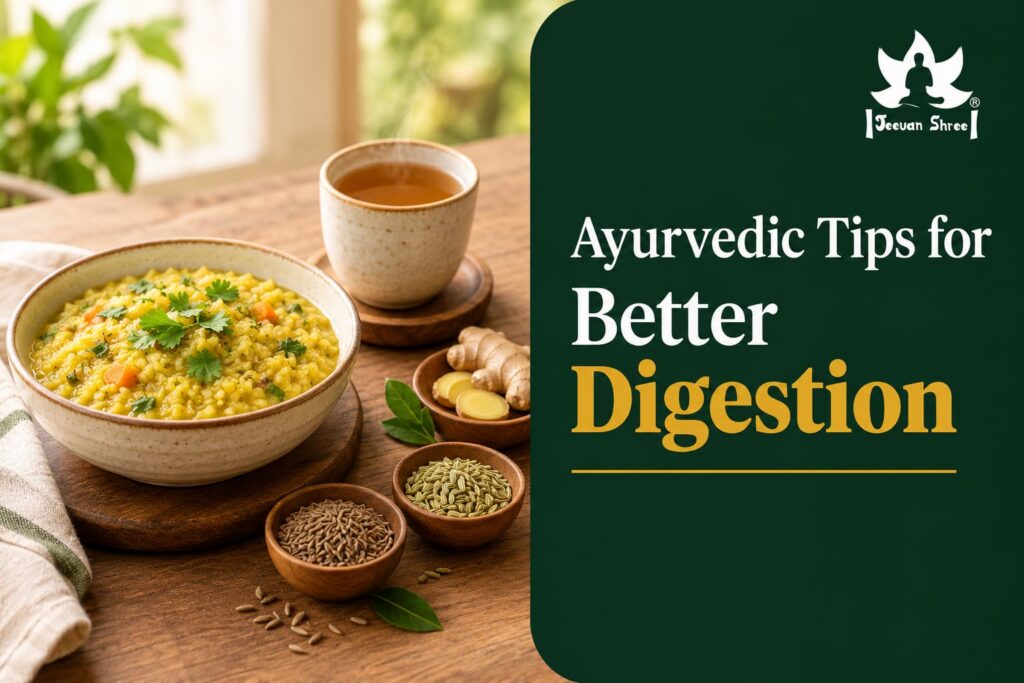
Ayurvedic tips for better digestion are mostly simple habits: eating at regular times, choosing warm and freshly cooked food, using everyday spices, and eating without rush. In Ayurveda, good digestion is seen as the base of everyday wellness. This guide explains the idea of agni and seven habits you can start today.
What does digestion mean in Ayurveda?
Ayurveda uses the word agni, or “digestive fire”, for the body’s ability to digest food and absorb what it needs. In traditional texts, a steady agni is linked with feeling light, hungry at the right times and comfortable after meals. A weak or irregular agni is described as heaviness, bloating or irregular appetite.
This is the traditional view. It is not a medical diagnosis, and the habits below are everyday food and lifestyle practices rather than treatment.
Ayurvedic tips for better digestion: 7 simple habits
Take a short walk after meals. Even 5 to 10 minutes of gentle walking after eating is a traditional habit.
Eat at regular times. Try to have breakfast, lunch and dinner at about the same time each day. A steady rhythm helps your body know when to expect food.
Choose warm, freshly cooked food. Ayurveda generally favours food that is cooked fresh and eaten warm, rather than very cold or long-stored meals.
Sip warm water. A cup of warm water in the morning, and small sips through the day, is a common Ayurvedic habit. Very cold drinks with meals are usually avoided.

Use everyday spices. Jeera (cumin), ajwain (carom seeds), saunf (fennel), ginger and a pinch of hing (asafoetida) are used in Indian kitchens in small amounts for flavour and are traditionally valued for the digestive process.
Eat mindfully. Sit down, chew well and put the phone away. Eating when you are calm and not in a hurry is a core idea of Ayurvedic eating.
Make lunch your main meal and keep dinner light. Ayurveda describes the middle of the day as the time when agni is strongest, so a fuller lunch and a lighter, earlier dinner (around 2 to 3 hours before sleep) fit this idea. You can read more in our guide to the Ayurvedic daily routine.
Foods and drinks often used in Ayurvedic kitchens
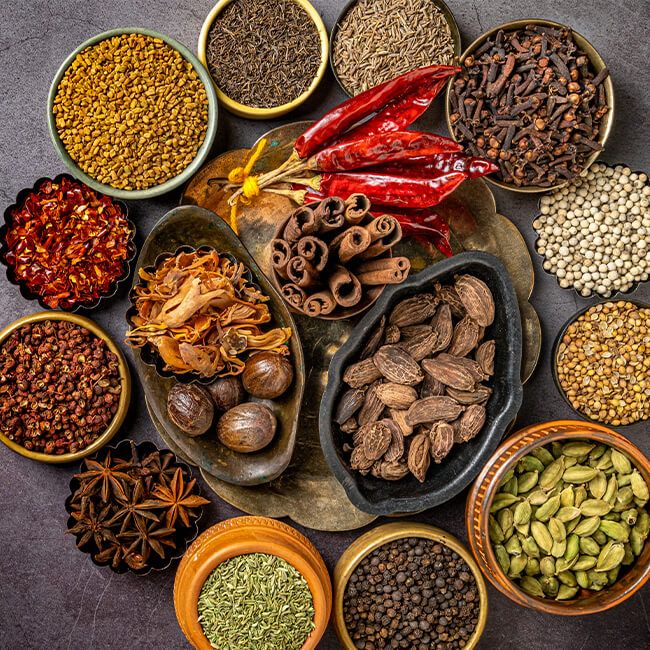
- Jeera water: cumin seeds soaked or boiled in water.
- Ginger: a few thin slices in tea or added to vegetables.
- Buttermilk (chaas) with roasted jeera: a traditional lunch-time drink.
- Saunf (fennel): chewed in small amounts after a meal.
- Khichdi and moong dal: simple, warm and easy meals.
These are food traditions, not cures. Use them in normal kitchen amounts.
What Ayurveda suggests going slow on
- Very cold drinks and ice-cold water with meals
- Heavy, deep-fried food late at night
- Skipping meals and then eating a very large one
- Eating while stressed, angry or distracted
- Eating again soon after a meal, before you feel hungry
Adjusting these Ayurvedic digestion tips to you
Everyone is different. Your age, work hours, the season and your usual diet all matter. Start with one habit, such as regular meal times or warm water, and keep it for a week before adding another.
If you would like to look at Ayurvedic products for everyday wellness, you can browse our Immunity & Daily Wellness range. Please speak to a qualified Ayurvedic practitioner or your doctor before using any product, especially if you are pregnant, taking medicines or have a health condition.
Frequently asked questions
Can I drink water with meals?
Small sips of warm water are fine for most people. Ayurveda generally suggests avoiding large amounts of very cold water during meals.
What is the best time to have dinner?
Many traditional guides suggest an early, light dinner, about 2 to 3 hours before sleep.
Is ginger suitable for everyone?
Ginger is a common kitchen spice. If you have gallstones, take blood-thinning medicines or are pregnant, check with your doctor first.
How long before I notice a difference?
It differs from person to person. Try a habit consistently for a few weeks and notice how you feel, rather than expecting a quick change.
When should I see a doctor?
See a doctor for ongoing stomach pain, vomiting, blood in the stool, unexplained weight loss or any symptom that lasts more than a couple of weeks. Do not rely on home habits for these.
For general information on Ayurveda, you can visit the Ministry of Ayush.
Last updated: 28 October 2026.
Disclaimer: This article is for general information only and is not medical advice. Ayurvedic habits support everyday wellness and are not a treatment for any disease. Consult a qualified doctor or Vaidya for your personal health needs.